
So, you’ve got yourself a VAZ-2107, a true legend of the Soviet and post-Soviet roads. That iconic boxy silhouette, the distinct purr of its engine, and that feeling of pure, unadulterated mechanical connection. It’s a car you don’t just drive; you have a relationship with. And like any good relationship, it requires attention, understanding, and a willingness to get your hands dirty. The beautiful thing about the «Zhiguli» is that it was designed in an era before cars became rolling computers. For the DIY enthusiast, it’s the perfect canvas to learn, tinker, and truly master your own vehicle.

Getting to Know the Heart: The Classic VAZ Engine
Let’s be honest, the 2107 isn’t winning any drag races. Its powerplant, typically the 1.5L or 1.6L carbureted engine, is a study in simplicity.
This is your biggest advantage. Basic maintenance is not just easy; it’s almost therapeutic.
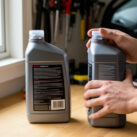
- Oil Changes are Your Best Friend: This is the number one rule for a long engine life. The engine bay is spacious. You can literally see the ground through it! Getting to the drain plug and the canister-style oil filter is a breeze. Do this every 5,000-7,000 km with a decent 10W-40 mineral or semi-synthetic oil, and the engine will forgive you many other sins.
- The Ignition System: Keep It Sparking: The 2107 uses a classic contact-breaker or later, a contactless transistor ignition system. Neither is complicated.
Learning to set the ignition timing with a strobe light is a fundamental skill. A misfire? It’s often just a worn set of spark plugs, a dirty distributor cap, or a faulty rotor arm. These are cheap parts and a 10-minute job. Carry a spare set in the trunk; you’ll feel like a hero when you need them.
- The Carburetor: Don’t Be Scared: The carburetor, usually a Weber or Solex model, is the soul of the engine—and the source of most tuning and troubleshooting.
It can be finicky, but it’s also completely understandable. Learning to adjust the idle speed and mixture is a rite of passage. A clean carburetor is a happy carburetor, so periodically cleaning the jets and the float chamber can solve a world of problems like rough idling or poor throttle response. There are countless diagrams and videos online; it looks more intimidating than it is.
Common Issues and How to Tame Them
Every 2107 has its own personality, which is a nice way of saying they all have their quirks. Here are the usual suspects:
- The Dreaded Cooling System: These engines can run hot, especially in traffic. The first thing to check is always the coolant level. Then, listen for the radiator fan—if it’s not kicking in, the thermal switch on the radiator might be dead. Replacing a thermostat or flushing the radiator are very common and very doable jobs. An overheating 2107 is usually crying out for a simple fix.
- Brakes: Safety First, Simplicity Always: The braking system is straightforward. Replacing brake pads and shoes is mechanically simple. The key is to regularly check the brake fluid level and watch for leaks at the wheel cylinders, which are a common failure point. Bleeding the brakes is a two-person job, but it’s not rocket science. Just make sure you have a helper and a clear plastic hose.
- The Electrical Gremlins: The electrics are the most «Soviet» part of the car. Problems are often due to bad grounds. A dim light, a lazy starter, or a non-functioning gauge can frequently be cured by finding and cleaning a corroded earth connection. Get yourself a simple multimeter and a wiring diagram. The system is low-voltage and simple enough to trace. Fuses and bulbs are easy to access and replace.
When to Know Your Limits
Even with this simple car, there are jobs where you might want to call a friend or a specialist.
- Clutch Replacement: This is a heavy, cumbersome job that involves separating the gearbox from the engine.
It requires jack stands, a lot of muscle, and special tools to align the clutch plate. It’s not for a first-timer in a home garage.
- Major Gearbox Work: While changing the gearbox oil is easy, rebuilding the synchros or replacing bearings inside the transmission is a specialist’s job that requires precision and specific knowledge.
- Bodywork and Welding: These cars love to rust.
Fixing sills, floor pans, and wheel arches properly requires welding skills and equipment. It’s better to have this done right than to botch it yourself.
The Final Word
Owning and maintaining a VAZ-2107 is a journey.
It’s about the satisfaction of hearing an engine you just tuned purr perfectly. It’s about the confidence of knowing you can fix most problems by the side of the road with a basic toolkit. This car teaches you mechanics in a way a modern car never could. There are no hidden computers, no complex error codes—just nuts, bolts, sparks, and fuel. Treat it well, learn its language, and your «Zhiguli» will not just be a car; it will be a loyal, mechanical friend that rewards your effort with miles of simple, honest driving pleasure. So grab your wrenches, don’t fear the grease, and keep the legend alive.